Typically when one thinks of a barefoot horse they think of the typical barefoot or pasture type trim that your standard farrier does. That, however, is not what I'm referring to. Instead, I am talking about the barefoot horse whose trim is more than just lacking a piece of steel, it is a trim that is methodical, logical and even therapeutic. It has also been met with a measure of controversy over the years, as I imagine most things do when they are against the majority opinion.
Improperly trimmed barefoot horses have helped to perpetuate a number of myths. Among them are notions that going barefoot puts the horse at greater risk of bruises, concussion, cracks, weak hooves, white line disease, thrush and absesses. Shoeing the horse and poor barefoot trimming are the culprits of many of these myths.Barefoot Myths
My experience with keeping a barefoot horse began in 1998 when every farrier available only managed to lame my horses more, even foundering one of them. This in turn was met with advice to use more “therapeutic shoeing” methods to fix him coupled with complete stall rest to fix the founder caused by poor therapeutic trimming. My gut feeling, as usual it seems, fought tooth and nail against this and it was not long before a good friend of mine made me aware of the barefoot movement of the time, including all the talk of Dr. Strasser‘s newly published books.
Fast forward a bit, I've trimmed my own horses since that fateful introduction and even done a fair amount of rehabbing of horses which were written off due to navicular, founder, severe club foot, unknown lamenesses and so on. I've seen nervous, spooking horses become relaxed and calm just by turning them into a properly trimmed barefoot horse. I've watched their entire body muscling change during the process and their posture. It is quite amazing to see really, and brings me to an observation I made of Jobi when he came home recently.
This is a horse who had always been barefoot, his entire life, until the last year. When I bought him as a coming 2 year old his hooves were long in the heel, compared to how I trim him, but not in any way horrible. His movement was always silky smooth as he pushed himself forward energetically at every gait and no notes of body soreness or stiffness.
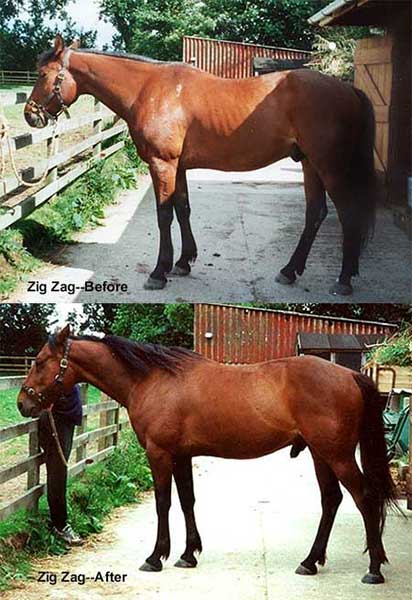
The first thing I noted about him when I saw him for the first time in a year was that his entire topline lacked muscling. He was not skinny and had not been sitting without work – to the contrary he was being ridden regularly and in good flesh, but still the muscling along his back and hindquarters was not there. He had front shoes on, and the way his hooves were trimmed in the back seemed illogical – in the angles, lack of contouring to relieve pressure on the quarters, overgrowth of the bars and the length of the toe.
When he moved it was strangely out of balance – a horse who always had the most amazing balance was falling all over himself when he moved, like some kind of awkward 2 year old again. His front legs flung out in front of him at the trot only to land on them harshly.
In the 13 years I have been trimming barefoot horses I have not once come across a raging case of thrush that, once properly trimmed, did not heal itself without any topical anti-fungals or disinfectants.Treating Thrush
I had his shoes pulled a week after coming home and proceeded to trim his hooves. It has been some time since trimming a freshly unshod horse and I forgot just how grotesque their feet smell. He also had a lovely case of thrush flourishing in the depths of his hooves and frogs that were obviously decayed and unhealthy – far from being the plump and luscious pads of the foot. His bars were also overgrown and his heels have become contracted to a great degree, all in just one year. The angles were off as well and the toe long, the shoes fitted too largely for his hoof.
In just a week following the trim, he is like a different horse again. With no work his topline has filled out by itself. He does not move like an awkward 2 year old but instead knows exactly where he is placing his feet again. These are qualities I want when I ride my horse, so if I see they are missing when he wears shoes why wouldn't I keep him a barefoot horse?
Unfortunately I'm not sure that most people notice these details about their non barefoot horse. They entrust all the education of the hoof to their paid farrier and whatever education, or lack thereof, they may have. I guess I have learned throughout the course of working with horses that it is always in my best interest to be as informed and educated about every aspect of their care that I can be, and to in turn encourage the same.
Barefoot horse trimming has progressed a lot in the years I have been involved, from the time when Dr. Strasser was terrifying farriers and vets by advocating barefoot horse trims for foundered and laminitic horses as well as by trimming down the sole area of the hoof. The measures are not as extreme but they are also becoming more common place and accepted. Some good places to get started researching are listed below. I highly encourage anyone who is serious about horses to check them out.
- Natural Horse Trim – Treating Founder (Chronic Laminitis) Without Shoes
- The Horse's Hoof – News for Barefoot Hoof Care
- Barefoot for Soundness
- Pete Ramey – Hoof Rehabilitation Specialists
Join 3,000 Equestrians
Receive New Articles In Your Email